NDIS Social & Community Participation Guide 2026

Camila
Healthcare Expert

Want to Get More Involved in Your Community?
Find providers who can help you find and access social and community activities
Takes 30 seconds. Free, no obligation.
NDIS Social and Community Participation: Complete 2026 Guide
NDIS community participation funding helps you get out into the world, build relationships, and engage meaningfully with your community. Whether you are exploring ndis community participation for the first time or trying to get more from your existing plan, this guide covers everything from a weekly art class to a structured public transport training program, depending on which funding category your plan includes.
NDIS Community Participation
NDIS community participation is one of the most used and most valued parts of the scheme. It funds the support you need to take part in activities outside your home, from sports and arts to volunteering and social groups. The funding does not pay for the activities themselves; it pays for the support worker time, transport, and assistance that make participation possible.
This guide explains exactly how it works, the difference between Core and Capacity Building funding, current 2025-26 rates, 100+ activity examples, group versus individual pricing, and how to write goals that actually get approved at your planning meeting.
Recent News: NDIS Social Participation Spending Under Scrutiny
March 15, 2026 - The NDIS spent $11.6 billion on social and community participation in 2025, representing 23.6% of the total scheme budget of $48.9 billion, according to recent reports by ABC News and the Australian Financial Review.
This substantial expenditure has generated debate among policymakers, disability advocates, and budget analysts about scheme sustainability and the appropriate scope of funded activities.
Key figures from the reports:
- Support workers can charge $70 per hour on weekdays, rising to $99 on Saturdays, $127 on Sundays, and up to $234 on public holidays
- Funded activities include cafe visits, dog walks, haircuts, movies, and other community participation activities
- The spending represents nearly a quarter of total NDIS expenditure
- Questions are being raised about long-term funding sustainability and the balance between social participation and other support categories
What this means for participants: Social and community participation remains a core pillar of the NDIS framework, designed to support participants in building meaningful community connections and reducing social isolation. The debate focuses on scheme-level sustainability rather than individual participant entitlements. If you have social and community participation funding in your plan, it continues to operate as approved. However, participants should be prepared to clearly demonstrate how funded activities connect to their NDIS goals and disability-related support needs at plan reviews.
The information in this guide reflects current NDIS pricing and policy settings. We will update this article as any policy changes are announced.
Key Points
- NDIS social and community participation sits across two separate budget categories: Core Supports (ongoing assistance) and Capacity Building (skill-building for independence). Understanding which one applies to you changes how you can use the funding.
- The primary Core Support line item is 04_104_0125_6_1 at $70.23 per hour on weekdays (2025-26 rate, up 3.95% from the prior year).
- Group-based activities cost significantly less per participant. A 1:3 group drops the per-person rate to around $27.50 per hour, stretching your budget considerably.
- Innovative Community Participation (04_105) is a separate, lesser-known line item that funds specialised programs for participants who need more intensive or tailored support.
- Transport to and from activities is covered under your community participation budget, not a separate line.
- Annual funding ranges from approximately $5,000 to $35,000-plus depending on your assessed support needs and goals.
Assistance with Social and Community Participation
Assistance with Social and Community Participation is the official NDIS name for the Core Support funding that pays a support worker to help you take part in community activities. This is the category most participants use for their regular weekly outings, group programs, and social activities. It sits under Core Supports, meaning the funding is flexible and ongoing. If you see line items starting with 04_104 or 04_105 in your plan, that is this category.
Increased Social and Community Participation
Increased Social and Community Participation is the Capacity Building equivalent. Where the Core category funds ongoing support, this category funds structured, time-limited programs designed to build your skills so that you can participate more independently over time. Think of it as an investment: you complete a 10-week program learning to catch public transport, and afterward you need less funded support to get around. The main line items here start with 09_011 and 09_009. If your plan review is coming up and you want to work toward greater independence, ask your planner about including Increased Social and Community Participation funding.
Core vs Capacity Building Explained
This is the number one thing people get wrong about NDIS community participation funding, and it matters because the two categories work very differently.
Core Supports: Assistance Now
Core Supports funding pays for a support worker to accompany and assist you to participate in activities today. It is ongoing. There is no expectation that you will graduate out of it. If you need regular support to attend your weekly swimming group, Core Supports is what funds that worker’s time each week.
Budget category: Core Supports Flexibility: You can shift unspent Core budget between Core sub-categories (daily activities, transport, participation) Who it suits: Anyone who needs consistent, ongoing support to access community life
Capacity Building: Building Skills for the Future
Capacity Building funding under the “Increased Social and Community Participation” category pays for structured programs designed to build your skills so you can participate more independently over time. The funding is time-limited and goal-focused. It is not meant to fund ongoing support indefinitely.
Budget category: Capacity Building Flexibility: Must be used for the designated Capacity Building purpose Who it suits: Participants working toward greater independence in specific areas
A simple way to think about the difference:
| Aspect | Core: Assistance | Capacity Building: Increased |
|---|---|---|
| Purpose | Support you to participate now | Build skills for future independence |
| Duration | Ongoing | Time-limited program |
| Budget flexibility | Flexible across Core | Must stay in Capacity Building |
| Example | Support worker accompanies you to art class each week | 12-week program teaching you to catch public transport independently |
| Key line items | 04_104, 04_105 | 09_011, 09_009 |
In practice, many participants have both categories in their plan. You might use Core funding for your regular weekly activities and Capacity Building funding for a structured course or training program running over several months.
Line Items and 2025-26 Rates
The NDIS increased prices by 3.95% from 1 July 2025. The rates below reflect the current 2025-26 price limits.
Core Supports: Assistance with Social and Community Participation
| Line Item Code | Description | Weekday Rate | Saturday | Sunday / PH |
|---|---|---|---|---|
| 04_104_0125_6_1 | Assistance with Social and Community Participation (Standard) | $70.23/hr | $98.32/hr | $126.41/hr |
| 04_105_0125_6_1 | Assistance with Social and Community Participation (High Intensity) | $77.73/hr | $108.82/hr | $139.91/hr |
| 04_102_0125_6_1 | Group Activities (1:2 ratio, per participant) | $39.87/hr | $55.82/hr | $71.77/hr |
| 04_103_0125_6_1 | Group Activities (1:3 ratio, per participant) | $28.79/hr | $40.31/hr | $51.83/hr |
| 04_104_0125_6_1 | Group Activities (1:4 ratio, per participant) | varies | varies | varies |
For a complete and up-to-date list, use the NDIS Price Guide tool or check the NDIS Pricing Arrangements page directly.
Capacity Building: Increased Social and Community Participation
| Line Item Code | Description | Purpose |
|---|---|---|
| 09_011_0117_6_3 | Development of Skills for Community Participation | Skill building for independent community access |
| 09_009_0117_6_3 | Participation in Community, Social and Civic Activities | Structured programs for social skill development |
Capacity Building line items do not have hourly price limits published in the same way as Core Supports. Rates are negotiated between you and your provider based on the program structure.
Group vs Individual Support
One of the most effective ways to stretch your community participation budget is choosing group-based activities where appropriate. The savings are substantial.
| Support Type | Ratio | Per Person Rate (Weekday) | 4-Hour Session Cost |
|---|---|---|---|
| Individual (1:1) | Just you | $70.23/hr | $280.92 |
| Group | 1:2 | $39.87/hr | $159.48 |
| Group | 1:3 | $28.79/hr | $115.16 |
| Group | 1:4 | Lower still | Lower still |
A 1:3 group saves approximately $165 per four-hour session compared with 1:1 support. Over 48 weeks of weekly sessions, that is around $7,920 in savings, which could fund many additional hours elsewhere in your plan.
Group activities also have social benefits beyond the cost savings. You are practising social skills, building relationships with peers, and participating in a more natural community setting. Many participants find that group activities are more enjoyable and more closely mirror the experience of community life without a disability.
When 1:1 support is appropriate:
- You are new to community activities and building initial confidence
- You have high support needs or safety requirements that a shared worker cannot meet
- You are working toward a very specific individual goal
- You are in an early skill-building phase before transitioning to group support
Many participants start with 1:1 support, then transition to group activities as skills and confidence grow.
Innovative Community Participation
Innovative Community Participation is a less commonly used but highly valuable part of the NDIS framework. It sits under the Core Supports category and is intended for participants who need a more specialised or intensive approach to community participation than standard support provides.
The relevant line item is 04_105_0125_6_1, which covers high-intensity assistance. In practice, providers offering Innovative Community Participation programs use this code to deliver structured programs that:
- Address specific barriers to community access that standard support cannot resolve
- Combine skill development with peer connection in a more intensive format
- Use specialised methodologies for participants with complex communication needs, dual diagnosis, or significant social anxiety
- Provide supported access to employment-adjacent community settings (volunteer work, community enterprise programs)
Typical examples of Innovative Community Participation programs:
- Supported social enterprise programs where participants produce goods or services for the community (market stalls, community cafes, woodworking cooperatives)
- Peer mentoring programs pairing participants with volunteers for structured community access
- Technology-assisted community access programs using communication devices, apps, or supported virtual participation
- Nature-based therapy programs combining outdoor activities with structured skill development
- Co-designed arts programs that culminate in a community exhibition or performance
Innovative Community Participation is not available from all providers. If this sounds like something that would suit you, ask your Support Coordinator to identify providers offering structured programs under this line item. The NDIS social and community participation service page has more information about what local providers offer.
100+ Activity Examples
NDIS community participation funding can support a wide range of activities. Below are examples organised by category. Your support worker’s time to help you attend and participate is funded, including transport. Entry fees, membership costs, food, and equipment are your everyday costs to pay yourself.
Sports and Recreation
| Activity Type | Examples |
|---|---|
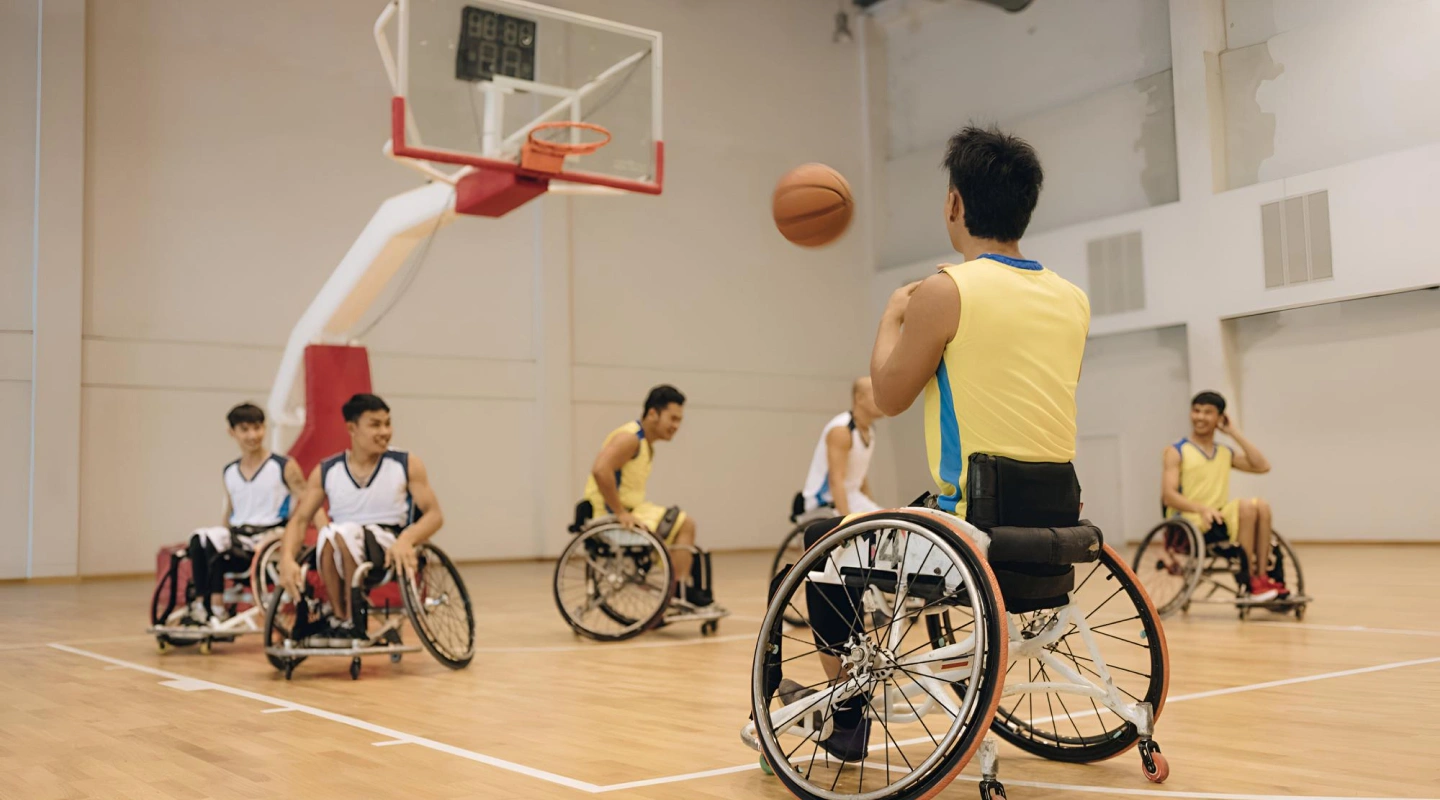
| Team sports | Wheelchair basketball, adaptive soccer, blind cricket, bocce, goalball |
| Individual sports | Swimming lessons, adaptive yoga, gym sessions, tennis, archery |
| Outdoor activities | Bushwalking groups, adaptive surfing, cycling clubs, kayaking, rock climbing |
| Fitness programs | Group exercise classes, aqua aerobics, personal training sessions, Pilates |
| Winter activities | Skiing programs, ice skating, indoor climbing walls |
Arts and Culture
| Activity Type | Examples |
|---|---|
| Visual arts | Painting classes, pottery workshops, photography clubs, printmaking, sculpture |
| Performing arts | Drama groups, choir, dance classes, improvisation workshops, storytelling groups |
| Cultural events | Museum visits, art gallery tours, concerts, festivals, film screenings |
| Music | Music lessons, drumming circles, band participation, recording studio programs |
| Crafts | Jewellery making, weaving, leatherwork, mosaic, glass fusing |
Learning and Development
| Activity Type | Examples |
|---|---|
| Educational courses | TAFE courses, digital literacy workshops, language classes, financial literacy |
| Life skills | Cooking classes, budgeting workshops, barista training, first aid courses |
| Personal development | Public speaking courses, leadership programs, assertiveness training |
| Technology | Coding bootcamps for beginners, tablet and smartphone skills, social media literacy |
Social Clubs and Community Groups
| Activity Type | Examples |
|---|---|
| Hobby groups | Book clubs, gaming groups, craft circles, film clubs, trivia nights |
| Support and advocacy | Peer support meetings, self-advocacy groups, disability pride events |
| Interest groups | Gardening clubs, bird watching, astronomy groups, train enthusiast societies |
| Cultural groups | Multicultural community groups, cultural celebration events, language exchange |
Volunteering and Civic Life
| Activity Type | Examples |
|---|---|
| Volunteering | Charity work, animal shelters, community gardens, food banks, Meals on Wheels |
| Civic participation | Town hall meetings, community forums, local government consultation sessions |
| Religious and spiritual | Church, temple, mosque, synagogue attendance, spiritual study groups |
| Environmental | Tree planting, beach cleanups, community composting programs |
Camps and Group Programs
| Activity Type | Examples |
|---|---|
| Day programs | Adventure activities, sports camps, art days, social skill programs |
| Residential camps | Multi-day outdoor camps, leadership programs, peer connection retreats |
| Holiday programs | School holiday activities, summer programs, themed interest camps |
For Children and Teens
- Adaptive swimming lessons with skill development focus
- Scouts or Guides groups with support
- School holiday programs focused on social skills
- Youth theatre or drama workshops
- Team sports with adaptive equipment
- Art therapy groups for self-expression
- Music lessons (individual or group)
- LEGO clubs for creative problem-solving
- Cooking classes for kids
- Gaming clubs with social interaction focus
- Coding and robotics clubs
- Junior parkour with adaptive modifications
- Skateboarding groups
- Junior community radio programs
- Science camps and STEM activity days
For Young Adults
- University or TAFE social clubs with support
- Fitness classes (yoga, Pilates, dance fitness)
- Volunteering at animal shelters
- Environmental groups (tree planting, beach cleanups)
- Photography clubs and photo walks
- Escape rooms with friends
- Board game cafes and meetups
- Indoor rock climbing with support
- Martial arts or self-defence classes
- Social sports leagues (dodgeball, ultimate frisbee)
- Community radio and podcast groups
- Barista training and cafe programs
- Art jamming sessions
- Hiking groups on accessible trails
- Community theatre productions
For Adults
- Community garden participation and allotment programs
- Book clubs at local libraries
- Cooking and baking classes
- Hiking groups with accessible trail options
- Meditation and mindfulness groups
- Volunteer tutoring or mentoring programs
- Community choir or a cappella groups
- Dance classes (line dancing, ballroom, contemporary)
- Men’s sheds and women’s groups
- Creative writing workshops
- Film appreciation clubs
- Community radio volunteering
- Social enterprise programs
- Debate or discussion groups
- Language learning conversation groups
For Seniors
- Seniors social groups at community centres
- Lawn bowls clubs with assistance
- Tai chi or gentle exercise classes
- Historical societies and local history groups
- Art appreciation and gallery tours
- Bridge or card game groups
- Gentle aqua aerobics
- Craft groups (knitting, quilting, woodworking)
- Bingo nights with social interaction
- Morning tea social groups
- Gentle yoga sessions
- Reminiscence and oral history groups
- Gentle gardening programs
- Walking groups on flat accessible paths
- Music appreciation and concert attendance
For All Ages
- Chess clubs
- Astronomy groups and stargazing nights
- Birdwatching societies
- Model building clubs
- Fishing groups
- Geocaching adventures
- Community theatre (behind the scenes or performing)
- Language learning classes
- Multicultural festivals and cultural celebrations
- Trivia nights at community venues
- Sewing and textile groups
- Cooking cultural cuisines workshops
- Community mosaic or mural projects
- Drumming circles
- Yoga in the park programs
Cost-saving tip: If you hold a Companion Card, many venues and activities will admit your support worker free of charge. This does not affect your NDIS funding but reduces out-of-pocket costs for entry fees and tickets. Check the Companion Card program in your state for participating venues.
Getting Funded: Goal-Setting Tips
Your NDIS plan needs clear, evidence-based goals to justify community participation funding. Planners and LACs look for goals that are specific, relevant to your disability, and connected to a meaningful outcome. Vague goals lead to underfunded plans.
What Makes a Strong Community Participation Goal
| Element | Weak Version | Strong Version |
|---|---|---|
| Specific | ”Get out more" | "Attend a weekly art class at my local community centre” |
| Measurable | ”Meet people" | "Attend 2 social events per month for 6 months” |
| Achievable | ”Join 10 clubs" | "Join 1 club and attend consistently” |
| Relevant | Any activity | Activity linked to your interests and disability-related barriers |
| Time-bound | ”Eventually" | "For the next 12 months, reviewed at my next plan meeting” |
Example Goals Ready to Use
Goal 1: Building Social Connections “I want to join a local book club and attend at least 8 meetings over the next 6 months. This will help me develop friendships, reduce social isolation, and build my confidence in group settings. I need support worker assistance to travel to the venue and help me participate in discussion.”
Goal 2: Developing Independence “I want to complete a 12-week cooking class at the local community centre, learning to prepare 10 different meals independently. This will build my confidence and practical skills for living more independently.”
Goal 3: Community Engagement “I want to volunteer at the local animal shelter for 2 hours each week for 12 months, building work skills, community connections, and a sense of contribution. I need transport and on-site support to manage the physical aspects of the role.”
Goal 4: Physical Health and Social Connection “I want to join a weekly adaptive sports program and participate in at least 40 sessions over the year to improve my physical fitness and build friendships with other participants.”
Goal 5: Increasing Independence in Community Access “I want to complete a structured public transport training program over 10 weeks so I can travel independently to my weekly social group without support worker assistance. This will reduce my reliance on funded transport and expand my community access.”
How Much Funding Can You Expect?
There is no fixed cap on community participation funding. Your allocation depends on your assessed support needs and the goals in your plan. Typical annual ranges are:
| Support Level | Annual Range | Approximate Hours Per Week |
|---|---|---|
| Low support needs | $5,000 to $10,000 | 2 to 4 hours |
| Moderate support needs | $10,000 to $20,000 | 4 to 6 hours |
| High support needs | $20,000 to $35,000-plus | 6 to 10-plus hours |
To build a case for your planning meeting, calculate what you actually need. For example: a weekly activity requiring 3 hours of support (including transport) at $70.23 per hour works out to $210.69 per week, or approximately $10,113 annually. Bring a written breakdown like this to your meeting, supported by a letter from your GP, therapist, or allied health professional confirming the therapeutic benefit.
For further goal-setting guidance, the NDIS SMART goals planning guide has detailed examples across all support categories.
What Is NOT Covered
Understanding what the NDIS does not fund is just as important as knowing what it does.
Everyday Costs You Pay Yourself
| Cost | Why It Is Not Funded |
|---|---|
| Entry fees and tickets | Everyday cost that everyone pays |
| Gym memberships | Standard community cost not related to disability |
| Meal and drink costs during activities | Everyday living expense |
| Standard sports equipment and instruments | Not disability-specific |
| Course and class registration fees | Educational cost |
| Accommodation for holidays | General living expense |
| Flights and transport for holidays | General living expense |
Activities That Are Unlikely to Be Approved
- Activities with no clear connection to your NDIS goals
- Pure leisure or entertainment with no skill-building or participation element
- Activities that could be funded through mainstream services (school, Medicare, aged care)
- Business travel or commercial training
What This Means in Practice
Example: You want to join a weekly art class.
- NDIS funds: Support worker time to help you travel there and participate during the class.
- You pay: Class registration fee and art supplies.
Example: You want to attend a concert.
- NDIS funds: Support worker to accompany you and provide assistance during the event.
- You pay: Concert ticket, food, and drinks.
Example: You want to go on a holiday with a support worker.
- NDIS funds: Support worker hours during the holiday.
- You pay: Flights, accommodation, meals, and attraction entry fees.
2026 NDIS Framework Changes
From 1 July 2026, the NDIS will begin transitioning participants to new framework plans. The key changes relevant to community participation:
Two-type funding structure: The current three buckets (Core, Capacity Building, Capital) transition to flexible funding and stated funding. Flexible funding can be used across any NDIS-approved supports. This may increase your ability to direct community participation funds without strict category boundaries, though the practical implementation details are still being finalised.
Assessment-driven plans: Support needs assessments using the I-CAN v6 tool will play a larger role in determining plan budgets. Clear, documented goals around community participation will matter more than ever at your planning meeting.
Longer plan periods: Extended plan durations reduce the frequency of reviews, meaning the goals you set at your next meeting may shape your funding for longer.
Participants will transition gradually. Most people will not experience changes immediately on 1 July 2026. Check the NDIS website for the latest updates as the rollout progresses.
Frequently Asked Questions
What is the difference between Assistance and Increased Social and Community Participation?
Assistance with Social and Community Participation (Core Support) funds a support worker to help you participate in activities now. Increased Social and Community Participation (Capacity Building) funds structured programs to build skills so you can participate more independently in the future. Core is ongoing; Capacity Building is time-limited and skill-focused. Most participants with regular community participation needs use Core Support for day-to-day activities.
What is the main NDIS line item for social and community participation?
The main Core Support line item is 04_104_0125_6_1 (Assistance with Social and Community Participation, Standard). The rate is $70.23 per hour on weekdays in 2025-26. For group activities, the per-participant rate is lower depending on the group ratio. For Capacity Building, the main code is 09_011_0117_6_3 (Development of Skills for Community Participation).
Can I use NDIS funding for a gym membership?
No. The gym membership fee is an everyday cost. However, you can use funding for a support worker to assist you at the gym if attending the gym is part of your NDIS goals and you need support to participate safely and meaningfully.
Is transport to activities covered?
Yes. Transport to and from activities is covered under your community participation budget. Your support worker can drive you (using their vehicle or yours), or you can use taxi or rideshare services. Keep receipts for any transport costs claimed.
How does group activity pricing work?
When a support worker assists multiple participants in a group, the hourly cost is split among participants. At a 1:3 ratio, each participant pays approximately $28.79 per hour instead of the full $70.23. This is a significant saving and is the most cost-effective way to participate in regular activities. Group activities also provide built-in social opportunities.
What is Innovative Community Participation?
Innovative Community Participation refers to structured, specialised programs delivered under the high-intensity Core Support line item (04_105_0125_6_1). These programs go beyond standard support to address specific barriers through tailored methodologies, such as social enterprise programs, nature-based therapy, or technology-assisted community access. Not all providers offer these programs. Ask your Support Coordinator if this approach suits your needs.
Can I use community participation funding for holidays?
Your support worker’s hours during a holiday can be funded if the activities align with your NDIS goals. The holiday costs themselves (accommodation, transport, entry fees, meals) are everyday expenses and are not covered. Keep detailed records of which hours were support-related to avoid issues at plan reviews.
What if there are no suitable activities in my area?
Speak with your Support Coordinator about online or virtual social groups, transport funding to access activities in a nearby town or suburb, provider-organised community programs, or the possibility of setting up a new group. Rural and remote participants may receive additional transport funding to account for greater distances. The NDIS core supports overview has more detail on transport line items.
Do I need a Support Coordinator to access community participation?
No, but a Support Coordinator can help significantly. They know local providers, community programs, and how to write goals that result in adequate funding. If you are self-managing or plan-managing, you can arrange your own activities and support workers without a coordinator, but you take on the administrative responsibility.
How do I write goals that get community participation funding approved?
Be specific about what you want to do, why it connects to your disability, how it builds your independence or wellbeing, and what support you need to make it happen. Bring a written activity plan with cost calculations to your planning meeting. Back it up with supporting letters from your GP, occupational therapist, or allied health professional. The NDIS SMART goals guide has detailed templates you can adapt.
Can children get community participation funding?
Yes. Children and young people can have social and community participation funding in their NDIS plans. Activities such as adaptive sports, school holiday programs, youth theatre, and social skills groups are all possible. Goals for children typically focus on skill development, peer connection, and community inclusion.
What is the Companion Card and how does it help?
The Companion Card is a state-run program that entitles eligible people with disability to a free ticket for their companion (including their support worker) at participating venues. It does not interact with your NDIS funding directly, but it reduces your out-of-pocket entry costs. Search for your state’s Companion Card program to apply.
Key Resources
- NDIS: Social and Community Participation - Official NDIS guidance on what is funded
- NDIS Pricing Arrangements - Official price limits updated annually
- NDIS Price Guide Tool - Searchable line item database
- NDIS Core Supports Overview - How Core Supports work across all categories
- NDIS SMART Goals Guide - Writing goals that get funded
- Assistance with Daily Life Guide - The related Core Support category
Next Steps
Social and community participation is one of the most personally meaningful parts of an NDIS plan. It is the funding that gets you out the door, into your community, and connected with people who share your interests.
The key to maximising this funding is understanding the two budget categories (Core and Capacity Building), choosing group activities where your needs allow, writing specific and measurable goals before your planning meeting, and keeping records of how the funding is building your independence and wellbeing over time.
If you are in Melbourne and looking for experienced support workers who can help you access activities in your area, the MD Home Care community participation service connects participants with workers who have local knowledge, flexible scheduling, and a genuine focus on helping you build the community life you want.
Contact MD Home Care for a free consultation about your community participation goals.
Need support at home?
Find the right provider for you or your loved ones through MD Home Care.