
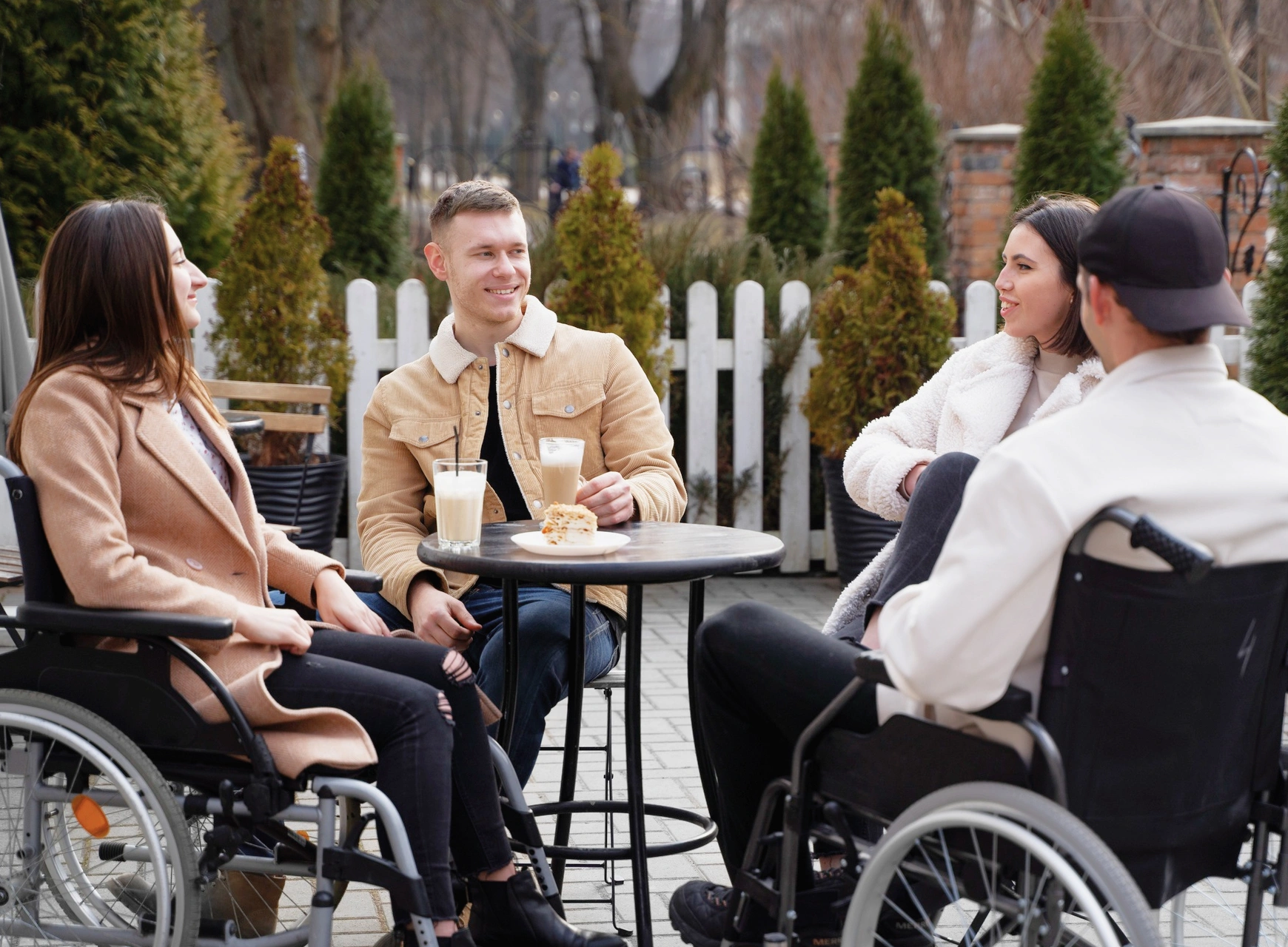
Find spinal muscular atrophy support in Australia
Compare verified providers and the support types that usually matter for spinal muscular atrophy across Australia. Skip the generic directory listings, get a real shortlist.
For spinal muscular atrophy
- 21683 verified providers across Australia
- Matched to the support types that fit spinal muscular atrophy
- Free quotes, no obligation
It only takes one minute and it's free.
What support people with Spinal Muscular Atrophy usually need
Spinal muscular atrophy is a genetic neuromuscular condition causing progressive muscle weakness due to the loss of motor neurons in the spinal cord, with severity ranging from early childhood onset to milder adult forms. SMA is a recognised NDIS condition and participants access supports including physiotherapy, respiratory nursing, personal care, and significant assistive technology. New disease-modifying treatments have improved outcomes, but functional support needs remain central to quality of life. The right mix of support depends on age, goals, living situation, and how much day-to-day impact spinal muscular atrophy has.
Physical support and independence
Many people compare providers for personal care, physiotherapy, assistive technology (wheelchairs, hoists, home modifications), and support workers who can handle physical transfers and mobility assistance safely.
Therapy and equipment
The most common starting points are physiotherapy, occupational therapy, exercise physiology, and assistive technology assessments. For progressive conditions, regular therapy review matters more than a one-off plan.
Choosing the right fit
Physical disability support needs providers whose workers are trained in safe manual handling, understand assistive equipment, and can deliver support that maintains independence rather than creating dependency.
Services and providers to compare first for Spinal Muscular Atrophy
For physical and mobility conditions, physiotherapy, assistive technology, and personal care are usually the first services to compare. Focus on providers with experience in your specific condition rather than general disability support.
What usually separates a strong provider from a generic one
- • Manual handling competency and experience with physical transfers, hoists, and mobility equipment
- • Whether therapists understand the specific condition's progression and can adjust treatment accordingly
- • Assistive technology assessment and prescription capability (wheelchairs, home mods, adaptive equipment)
- • Availability of support workers trained for high-physical-support needs, including overnight or morning routines
Best Spinal Muscular Atrophy Support providers near me
Showing 10 of 10 providers·How we rank
Miracle Health Services
Craigieburn, VIC and 10 othersAlso servesBallarat North, VIC · Ferntree Gully, VIC · Geelong, VIC · Kilmore, VIC · Melbourne, VIC · Melton, VIC · Mernda, VIC · Sunbury, VIC · Sunshine North, VIC · Wallan, VIC
Specialises in Personal care · Domestic assistance · Transport
Miracle Health Services is a trusted NDIS provider dedicated to supporting individuals in Craigieburn, VIC, and the surrounding areas. As a registered NDIS provider, they offer a comprehensive range of services designed to enhance the lives of participants.
How we verified this provider
- Registered with the NDIS Quality & Safeguards Commission
- Approved Aged Care provider (Department of Health)
- Business address confirmed
- Team includes Cleaner, Disability Support Worker, Registered Nurse
Altido Consulting Services
Parramatta, NSW and 10 othersAlso servesAuburn, NSW · Bankstown, NSW · Blacktown, NSW · Canowindra, NSW · Forbes, NSW · Gosford, NSW · Harris Park, NSW · Hornsby, NSW · TOONGABBIE, NSW · Woy Woy, NSW
Specialises in Personal care · Domestic assistance · Transport
Altido Consulting Services is a dedicated NDIS provider committed to delivering exceptional disability support to the vibrant community of Parramatta, NSW. Understanding the unique needs of individuals with disabilities in this area, Altido Consulting Services offers a comprehensive suite of services designed to foster independence, promote community engagement, and enhance overall quality of life for participants.
How we verified this provider
- Registered with the NDIS Quality & Safeguards Commission
- Approved Aged Care provider (Department of Health)
- Business address confirmed
- Team includes Disability Support Worker
Clover Leaf Sanctuary Pty Ltd
St Albans, VIC and 63 othersAlso servesAirport West, VIC · Albion, VIC · Altona North, VIC · Ardeer, VIC · Ascot Vale, VIC · Bentleigh East, VIC · Broadmeadows, VIC · Brooklyn, VIC · Brunswick, VIC · Bundoora, VIC · Burnside, VIC · Cairnlea, VIC · +51 more
Specialises in Personal care · Therapy · Domestic assistance
They are committed to empowering NDIS participants with essential life skills and community integration.
How we verified this provider
- Registered with the NDIS Quality & Safeguards Commission
- Business address confirmed
Not finding the right match?
Leave your details and we'll connect you with spinal muscular atrophy support providers in Australia — no wait list.
No login. No spam. We text or email when a match is ready.
Heart For Care Disability Services
Fig Tree Pocket, QLD and 53 othersAlso servesAlderley, QLD · Ashmore, QLD · Avoca, QLD · Banks Creek, QLD · Beenleigh, QLD · Benowa, QLD · Brisbane City, QLD · Browns Plains, QLD · Bundaberg West, QLD · Bunya, QLD · Burpengary, QLD · Caboolture South, QLD · +41 more
Specialises in Personal care · Social support · Support coordination
They are committed to delivering high-quality, person-centered disability support to empower NDIS participants.
How we verified this provider
- Registered with the NDIS Quality & Safeguards Commission
- Business address confirmed
Haven Care Australia
Chapman, ACT and 24 othersAlso servesBelconnen, ACT · Coombs, ACT · Evatt, ACT · Florey, ACT · Forest Lake, QLD · Garran, ACT · Gungahlin, ACT · Harrison, ACT · Jerrabomberra, NSW · Kambah, ACT · Melba, ACT · Mount Gravatt, QLD · +12 more
Specialises in Personal care · Domestic assistance · Transport
Haven Care is a dedicated NDIS provider committed to delivering exceptional disability support services to the residents of Chapman. Understanding the unique needs of the local community, Haven Care strives to empower participants in Chapman with the independence and choice they deserve, fostering a more inclusive and accessible environment.
How we verified this provider
- Registered with the NDIS Quality & Safeguards Commission
- Business address confirmed
NitPlans Care Services
Casula, NSW and 52 othersAlso servesArtarmon, NSW · Ballarat Central, VIC · Balmain, NSW · Bankstown, NSW · Baulkham Hills, NSW · Belmore, NSW · Bentleigh East, VIC · Blacktown, NSW · Blakehurst, NSW · Camden, NSW · Campbelltown, NSW · Canterbury, VIC · +40 more
Specialises in Personal care · Domestic assistance · Support coordination
NitPlans Care Services is dedicated to providing exceptional NDIS support to the vibrant community of Casula, NSW. As a compassionate provider, they focus on delivering personalised care solutions designed to meet the unique needs of individuals living with disabilities. Their commitment extends to fostering independence and enhancing the quality of life for Casula residents.
Carers Quality Community Services
Cranbourne, VIC and 20 othersAlso servesBallarat North, VIC · Bendigo, VIC · Bentleigh East, VIC · Berwick, VIC · Clayton, VIC · Clyde North, VIC · Coburg North, VIC · Cranbourne West, VIC · Diamond Creek, VIC · Footscray, VIC · Frankston, VIC · Geelong, VIC · +8 more
Specialises in Personal care · Domestic assistance · Therapy
They are committed to delivering high-quality disability support services tailored to the unique needs of NDIS participants.
How we verified this provider
- Registered with the NDIS Quality & Safeguards Commission
- Business address confirmed
Enable Community
Parramatta, NSW and 45 othersAlso servesAlbury, NSW · Arndell Park, NSW · Artarmon, NSW · Baulkham Hills, NSW · Bella Vista, NSW · Blacktown, NSW · Bossley Park, NSW · Box Hill, NSW · Bungarribee, NSW · Castle Hill, NSW · Chester Hill, NSW · Doonside, NSW · +33 more
Specialises in Personal care · Therapy · Domestic assistance
They are committed to empowering NDIS participants with a comprehensive range of high-quality disability support services.
How we verified this provider
- Registered with the NDIS Quality & Safeguards Commission
- Business address confirmed
- Team includes Physiotherapist
Living Life Limitless Pty Ltd
Seacombe Heights, SA and 76 othersAlso servesAberfoyle Park, SA · Adelaide, SA · Aldinga Beach, SA · Andrews, SA · Andrews Farm, SA · Balaklava, SA · Barmera, SA · Blackwood, SA · Blakeview, SA · Brighton, SA · Brompton, SA · Brooklyn Park, SA · +64 more
Specialises in Personal care · Domestic assistance · Transport
Living Life Limitless Pty Ltd is a dedicated, registered NDIS provider proudly serving Seacombe Heights and the wider South Australian community. They are committed to empowering NDIS participants with a comprehensive range of high-quality disability support services.
How we verified this provider
- Registered with the NDIS Quality & Safeguards Commission
- Business address confirmed
Helping Solutions WA
South Perth, WA and 23 othersAlso servesArmadale, WA · Balga, WA · Bibra Lake, WA · Bunbury, WA · Busselton, WA · Canning Vale, WA · Cannington, WA · Clarkson, WA · Cockburn Central, WA · Collie, WA · Ellenbrook, WA · Fremantle, WA · +11 more
Specialises in Personal care · Domestic assistance · Meal preparation
They offer a comprehensive range of NDIS services designed to empower participants and enhance their quality of life.
How we verified this provider
- Registered with the NDIS Quality & Safeguards Commission
- Business address confirmed
- Team includes Disability Support Worker, Registered Nurse
How we rank providers
Rankings in Australia are based on real outcomes between providers and families on our platform. They are recalculated daily and cannot be purchased or influenced by advertising.
- Outcomes with families. We measure what happens after a family contacts a provider. Providers where families report positive outcomes rank higher. Multiple signals are weighted across a rolling window.
- Service match. Providers are ranked by how closely their registered services and capabilities match what you are searching for.
- Registration and compliance. NDIS registered and government-approved aged care providers are weighted for meeting quality and safeguards standards.
- Local presence. Providers confirmed in Australia rank above those covering only the broader region.
What does "Trusted" mean? The Trusted badge is awarded to providers with a consistent record of positive outcomes with families on our platform. It is based on multiple behavioural signals and family feedback, and it cannot be purchased.
26,261
providers in Australia
Where spinal muscular atrophy support is available
Providers listed
26,261
States with coverage
4
How providers are verified
Every provider listed is cross-checked against the official Australian registers before appearing here. This is separate from the Trusted badge, which reflects platform outcomes.
NDIS register cross-check
Every NDIS-registered provider listed is verified against the NDIS Commission register. Registration numbers and approved support groups are pulled from the official register, not self-declared.
Source: NDIS Quality and Safeguards CommissionAged care approval status
Aged care approved status reflects the Australian Government Department of Health and Aged Care approved provider list, including service types and category groups.
Source: Department of Health and Aged CareABN verification
Every listing includes an Australian Business Number. Providers without a valid, active ABN do not appear in our directory.
Source: Australian Business RegisterComplaints process
If you have a concern about any provider, you can lodge a complaint with the NDIS Commission or the Aged Care Quality and Safety Commission at any time. We also accept complaints via our own channel.
Source: NDIS Commission / Aged Care CommissionWhat happens after you request support
The next step is usually to narrow the services that matter most, shortlist two or three realistic providers, and ask practical questions about fit, availability, staff continuity, and how support will work in real life.
1. Map physical support needs
Work out whether the main priorities are therapy, personal care, equipment and home modifications, or a combination that needs coordinating across providers.
2. Compare condition-specific providers
Look for providers whose therapists and support workers have experience with the specific physical condition, not just general mobility support. Compare equipment capability and manual handling training.
3. Confirm practical logistics
Ask about morning/evening routine availability, how transfers and personal care are handled, equipment maintenance, and whether the provider can cover weekends or overnight if needed.
For NDIS participants with physical conditions, confirm whether the provider can coordinate across therapy, personal care, and assistive technology, and whether support workers are trained in the manual handling and equipment relevant to your condition.
Understanding Spinal Muscular Atrophy (SMA)
Spinal muscular atrophy (SMA) is a genetic neuromuscular condition caused by mutations in the SMN1 gene, affecting the motor neurones that control voluntary muscle movement. It affects approximately 1 in 10,000 births in Australia. SMA is classified by types based on the age of onset and highest motor function achieved: Type 1 (severe, onset before 6 months), Type 2 (intermediate, onset 6-18 months), Type 3 (mild, onset after 18 months), and Type 4 (adult onset). New treatments including nusinersen (Spinraza) and gene therapy (Zolgensma) have significantly changed the trajectory for many people with SMA, particularly those treated early. However, SMA remains a condition requiring significant support for many individuals. Muscle weakness affects limbs, trunk, respiratory muscles, and sometimes swallowing. Cognitive function is typically normal or above average, and many people with SMA pursue education, careers, and independent living with appropriate physical support.
How spinal muscular atrophy affects daily life
SMA affects daily life through progressive or stable muscle weakness that limits mobility, self-care, and physical independence. People with Type 1 or 2 SMA require assistance with most physical tasks and use powered wheelchairs. Type 3 SMA allows walking but often with increasing difficulty over time. Respiratory function may be compromised, requiring non-invasive ventilation during sleep or continuously. Fatigue is common because weakened muscles work harder for every movement. Despite physical limitations, people with SMA are typically cognitively intact and engaged, which means support should enable their participation in education, work, and community life rather than restricting it.
What to look for in a provider
Good SMA providers understand the specific neuromuscular nature of the condition and the importance of preserving rather than building muscle strength (overexertion can be harmful). Ask whether their physiotherapists have neuromuscular experience, whether they can manage respiratory equipment, and how they support powered mobility independence. Red flags include providers who push intensive strengthening exercises (which can be counterproductive for SMA), who are not comfortable with respiratory equipment, or who underestimate the person's cognitive abilities because of their physical limitations.
How to access funding
SMA is on the NDIS List A, meaning a confirmed genetic diagnosis provides automatic NDIS access. Plans typically include physiotherapy, OT, personal care, assistive technology (powered wheelchairs, respiratory equipment), and support workers. Plans are reviewed annually and should anticipate equipment needs proactively. Specialist support coordination helps manage the complex interface between NDIS supports, neurology, respiratory medicine, and the new disease-modifying treatments that may be funded through the Pharmaceutical Benefits Scheme.
Funding and costs for spinal muscular atrophy support
Lower
$30,000
per year
Typical
$100,000
per year
Higher
$350,000+
per year
Plan size depends on the SMA type and functional level. Type 1 and 2 SMA require full personal care, powered mobility, respiratory equipment, and often SIL. Type 3 and 4 may need less daily support but still require therapy and equipment.
Common funding categories
Power wheelchairs with full tilt/recline cost $20,000-$60,000+. Respiratory equipment costs $3,000-$10,000. Allied health sessions cost $193-$234/hr under the NDIS.
Figures are indicative and based on the current NDIS Price Guide and published Home Care Package rates. Actual costs depend on your plan, provider, and location.
Check the Eligibility
Take our quick assessment to find out if you or your loved one qualifies.
Need help comparing the right support providers?
We can help you narrow the right service mix, compare likely-fit providers, and avoid wasting time on generic options for spinal muscular atrophy.
Frequently Asked Questions
Does spinal muscular atrophy qualify for NDIS in Australia?
What physiotherapy is recommended through NDIS for spinal muscular atrophy in Australia?
Can NDIS fund power wheelchairs and assistive technology for spinal muscular atrophy in Australia?
How does NDIS support respiratory needs for people with spinal muscular atrophy in Australia?
What supported independent living options exist for adults with spinal muscular atrophy in Australia?
Popular local support pages for Spinal Muscular Atrophy
Use these pages to compare local providers, check which services are most relevant in each area, and widen your shortlist if the first suburb does not have the right fit.
Find spinal muscular atrophy providers near you
Top suburbs by number of available providers.